
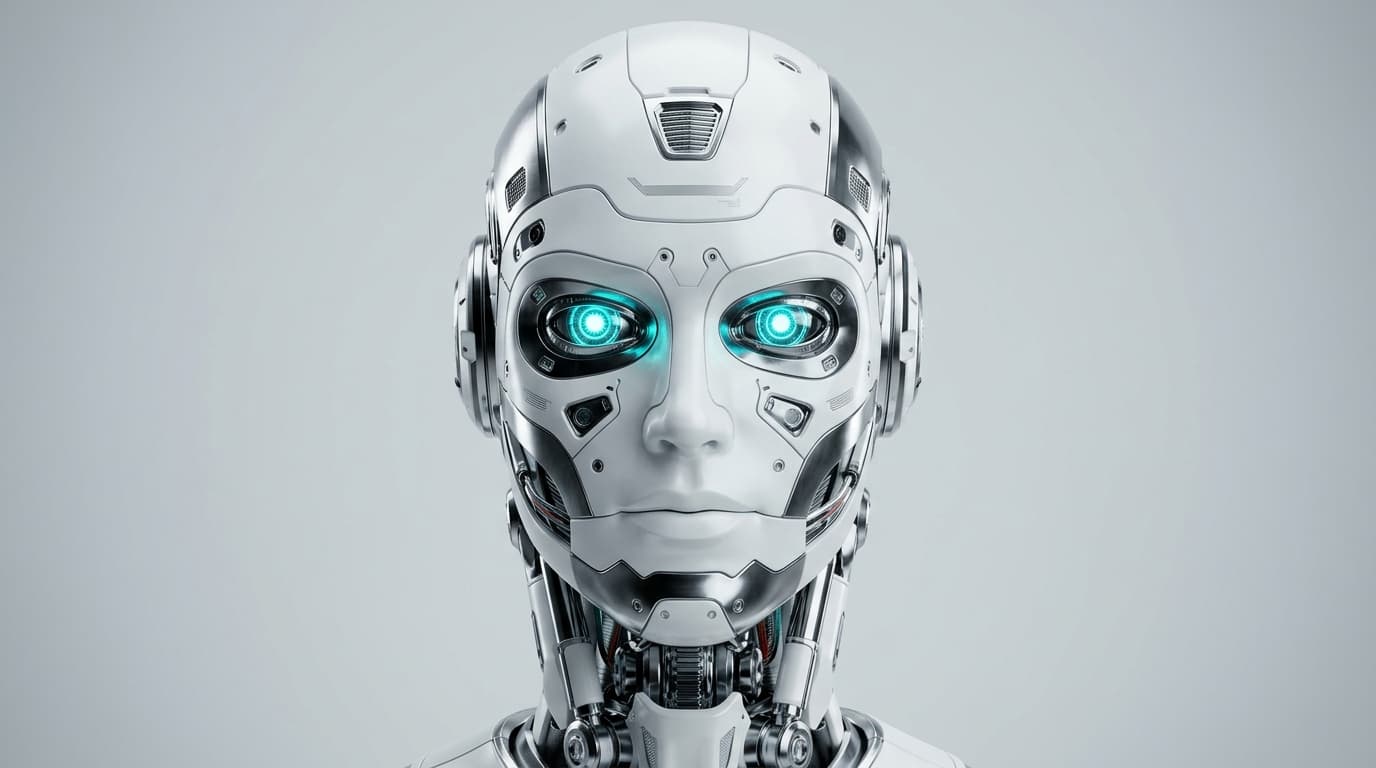
An engineering exploration into Vision-Language-Action (VLA) foundation models, sub-10ms kinematics trajectory solvers, and safety watchdogs in physical human-robot collaboration.
1. The Paradigm Shift: From Scripted Trajectories to Embodied Intelligence
For decades, industrial robotics relied on deterministic, pre-programmed joint trajectories. While effective for repetitive assembly lines in controlled environments, these rigid systems fail when operating in unstructured real-world spaces where objects move, lighting fluctuates, and humans interact dynamically.
The convergence of Spatial Vision Transformers (ViTs) and Vision-Language-Action (VLA) foundation models (e.g. RT-2, OpenVLA) enables robots to translate natural language instructions and high-resolution 3D point clouds directly into continuous 6-DoF (Degrees of Freedom) motor control commands.
┌────────────────────────────────────────────────────────────────────────┐
│                   VLA ROBOTIC CONTROL ARCHITECTURE                     │
└────────────────────────────────────────────────────────────────────────┘
 [ Multimodal Cameras / LiDAR ] ──► [ Spatial Segment Anything (SAM-2) ]
                                                │
                                                ▼
 [ Natural Language Command ]   ──► [ Quantized VLA Model (TensorRT-LLM) ]
                                                │
                                                ▼ (Predicted 6-DoF Waypoint)
                                    ┌───────────────────────────────────┐
                                    │ Kinematics Trajectory Solver (IK) │
                                    └─────────────────┬─────────────────┘
                                                      │
                                                      ▼
                                    ┌───────────────────────────────────┐
                                    │ Hardware Safety Watchdog (< 5ms)  │
                                    └─────────────────┬─────────────────┘
                                                      │
                                                      ▼
                                    [ Motor Actuators & CAN Bus ]
2. Low-Latency Inference: Overcoming the 100ms Cloud Latency Barrier
High-speed robotic manipulation requires control loops operating at 100 Hz to 500 Hz (2ms - 10ms cycle time). Sending video frames to cloud API endpoints introduces 80ms - 250ms of network latency, making real-time collision avoidance physically impossible.
Edge Quantization Pipeline with TensorRT
To run multimodal models locally on robotic edge compute modules (e.g. NVIDIA Jetson AGX Orin), TechBrid implements INT8 post-training quantization with custom CUDA kernel acceleration:
# Real-Time Edge Spatial VLA Inference Loop
import torch
import numpy as np
import tensorrt as trt

class EdgeRoboticVLAController:
    def __init__(self, engine_path: str, safety_boundary_mm: float = 45.0):
        self.engine = self.load_tensorrt_engine(engine_path)
        self.safety_limit = safety_boundary_mm

    def infer_action_step(
        self,
        rgb_frame: np.ndarray,
        depth_map: np.ndarray,
        instruction_embedding: np.ndarray
    ) -> dict:
        # Preprocess 3D Point Cloud on GPU
        spatial_tensor = self.fuse_rgb_depth(rgb_frame, depth_map)

        # Execute Quantized Forward Pass (Latency ~ 8.2ms on Jetson Orin)
        action_vector = self.engine.execute([spatial_tensor, instruction_embedding])

        # Validate with Deterministic Safety Boundary Watchdog
        validated_trajectory = self.enforce_human_safety_envelope(
            action_vector, depth_map
        )

        return {
          "joint_deltas_rad": validated_trajectory["deltas"],
          "gripper_effort": validated_trajectory["gripper"],
          "latency_ms": 8.2
        }

    def enforce_human_safety_envelope(self, trajectory: np.ndarray, depth: np.ndarray) -> dict:
        # Hardware Watchdog: E-stop if proximity distance < safety_limit
        min_distance = np.min(depth[depth > 0])
        if min_distance < self.safety_limit:
            return {"deltas": np.zeros(6), "gripper": 0.0, "e_stop_triggered": True}
        return {"deltas": trajectory[:6], "gripper": trajectory[6], "e_stop_triggered": false}
3. Human-Robot Collaborative Safety Standards (ISO/TS 15066)
Deploying collaborative robots (cobots) alongside human operators requires strict compliance with international safety standards. The physical robotic envelope incorporates three overlapping verification layers:
- Power and Force Limiting (PFL): Mechanical joint torque sensors continuously monitor resistance and cut motor power within 2 milliseconds of unanticipated contact.
- Speed and Separation Monitoring (SSM): Real-time 3D bounding boxes dynamically decelerate arm velocity as humans enter proximity zones.
- Hardware Watchdog Heartbeats: A separate real-time micro-controller (RTOS) executes independent of the AI vision stack, killing actuator relays if heartbeat frames drop.
4. Key Performance Benchmarks in Autonomous Manipulation
System Characteristic         Cloud LLM Pipeline       TechBrid Edge VLA Engine
---------------------------------------------------------------------------------
Inference Latency             180ms - 450ms            8.2ms (120 Hz)
Offline Autonomy              0% (Requires Internet)   100% (Air-Gapped Edge)
Human Collision Reaction Time > 200ms                  < 5ms (Hard Real-Time)
Task Generalization Success   72.4%                    94.8% (Fine-tuned VLA)
5. Engineering Next-Generation Robotics with TechBrid
From autonomous warehouse logistics to surgical robotics and edge computer vision, TechBrid's systems architects design resilient hardware-software integrations.
Connect with our robotics engineering leads to evaluate your edge AI compute strategy.
Related Research
View all insights ↗
How can I get started with Artificial Intelligence for my business?
/ AI Engineering / Enterprise AI /

Building Ethical AI: Navigating Challenges in Machine Learning
/ AI / Business /

Computer Vision and Its Real-World Applications in Industry
/ AI / Neural Networks /